
The world is not just changing — it is accelerating. Technologies that once took decades to reshape industries now take only a few years. From automation to artificial intelligence, businesses are transforming their operations faster than ever. As a result, professionals are rushing to learn “future-proof” skills. But before jumping into random courses, it’s important to understand which careers are likely to dominate the next decade — and how you can strategically prepare for them.
Here are 10 careers that are expected to shape the next 10 years, along with a brief roadmap on how to get started in each.
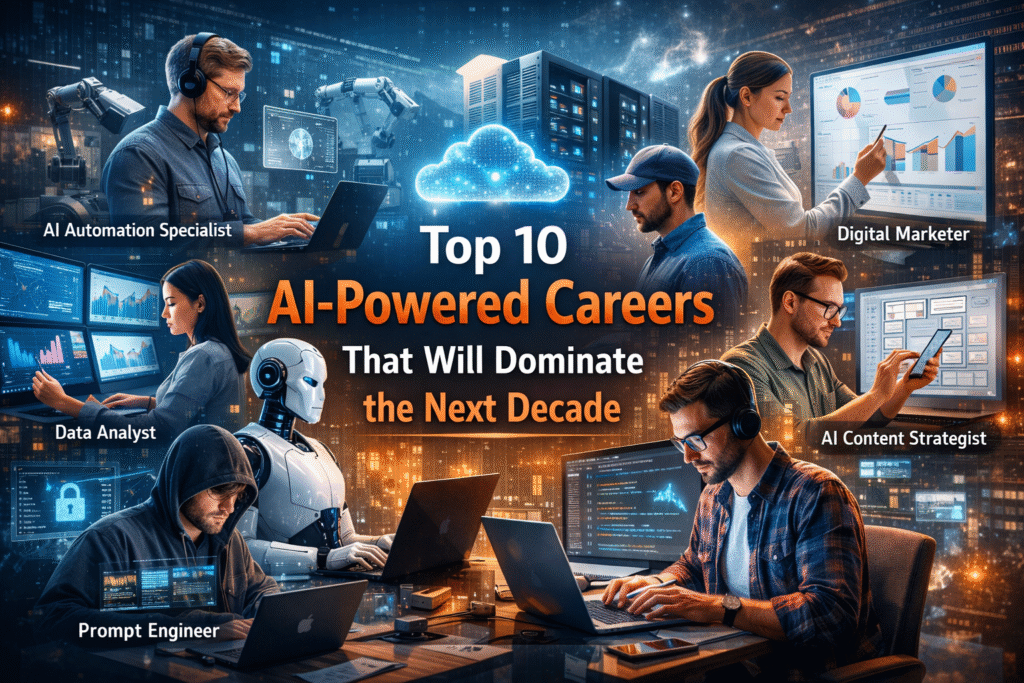
AI Automation Specialist
An AI Automation Specialist focuses on designing systems that automate repetitive tasks using artificial intelligence tools. Companies want to reduce manual work and increase efficiency, whether in HR, finance, marketing, or customer service.
To enter this field, start by learning automation tools such as Zapier, Make (Integromat), and AI-powered workflow systems. Build a foundation in Python and basic machine learning concepts. Platforms like Coursera, Udemy, and YouTube offer practical automation courses. The key is practice — automate small processes in your own workflow and build a portfolio of use cases.
AI Agent Developer
AI agents are intelligent systems that can perform tasks autonomously, make decisions, and interact with users. As businesses adopt AI-powered assistants and task agents, developers who can build and deploy them will be in high demand.
To become an AI Agent Developer, learn programming (especially Python), understand APIs, and explore frameworks like LangChain. Study large language models and how they integrate into applications. Hands-on experimentation through open-source projects and GitHub collaboration will accelerate your growth.
Data Analyst with AI Skills
Traditional data analysis is evolving. Companies now expect analysts to use AI tools to generate insights, automate reporting, and predict trends. Start with Excel and SQL to understand data fundamentals. Then move to Python, Power BI, or Tableau. Learn machine learning basics to add predictive capabilities. Platforms like Kaggle provide real datasets to practice on. Combining data storytelling with AI-driven insights will make you stand out.
Cybersecurity Specialist
As digital transformation expands, cyber threats are increasing. Cybersecurity Specialists protect systems, networks, and data from attacks. This role will remain critical as organizations rely more heavily on cloud services and AI systems.
Begin with networking fundamentals and operating systems. Certifications such as CompTIA Security+ and Certified Ethical Hacker can provide structured learning. Practice in virtual labs like TryHackMe or Hack The Box. Cybersecurity demands continuous learning, as threats constantly evolve.
Cloud Engineer
Most businesses are moving to cloud infrastructure to scale operations efficiently. Cloud Engineers design, manage, and optimize cloud environments. Start by learning cloud fundamentals from platforms like Amazon Web Services (AWS), Microsoft Azure, or Google Cloud. Understand DevOps principles and containerization tools like Docker and Kubernetes. Certifications from cloud providers significantly boost credibility.
AI Product Manager
An AI Product Manager bridges the gap between technical AI teams and business stakeholders. They define product vision, manage development cycles, and ensure AI solutions deliver real value.
To enter this field, develop a strong understanding of product management fundamentals — roadmap planning, user research, and agile methodologies. At the same time, gain basic AI knowledge to communicate effectively with technical teams. Courses on product management combined with AI fundamentals are a powerful combination.
Prompt Engineer
With the rise of large language models like those developed by OpenAI, prompt engineering has emerged as a valuable skill. Prompt Engineers craft precise instructions to get optimal outputs from AI systems.
Start by experimenting with AI tools daily. Learn how model behavior changes with different prompts. Study natural language processing basics and understand how context influences output. The best way to learn prompt engineering is through experimentation and documentation of results.
Digital Marketing with AI
Digital marketing is being transformed by AI-driven analytics, automation, and personalization. Professionals who combine marketing strategy with AI tools can significantly outperform traditional marketers.
Begin with marketing fundamentals: SEO, content marketing, paid ads, and analytics. Then explore AI tools for audience targeting, automated content generation, and predictive customer insights. Platforms like Google Analytics, Meta Ads, and AI-powered marketing software are essential practice grounds.
UX Designer with AI Products
As AI-powered applications grow, designing intuitive user experiences becomes even more important. UX Designers working with AI must understand how users interact with intelligent systems.
Learn UX fundamentals: wireframing, user research, and usability testing. Tools like Figma are industry standards. Additionally, study how AI impacts user behavior — for example, trust in automated recommendations. Case studies and portfolio projects showcasing AI product interfaces will strengthen your position.
AI Content Strategist
Content creation is no longer just about writing; it’s about orchestrating AI tools to scale content while maintaining authenticity. An AI Content Strategist designs systems that blend human creativity with AI efficiency.
To develop this career, master content strategy fundamentals — audience research, SEO, and brand voice. Then integrate AI tools for ideation, drafting, and optimization. Study how algorithms rank content and how AI-generated content performs. Build your own blog or personal brand as a testing ground.
Final Thoughts
The future does not belong to those who chase every trending skill. It belongs to those who strategically align their learning with long-term industry needs. The next decade will reward professionals who combine technical understanding with problem-solving ability and adaptability.
Instead of rushing into random certifications, choose a direction that aligns with your strengths and interests. Build foundational knowledge first. Then layer AI capabilities on top of it.
Remember, the goal is not just to learn tools — it is to understand systems, think critically, and create value in a world increasingly powered by intelligent technology.